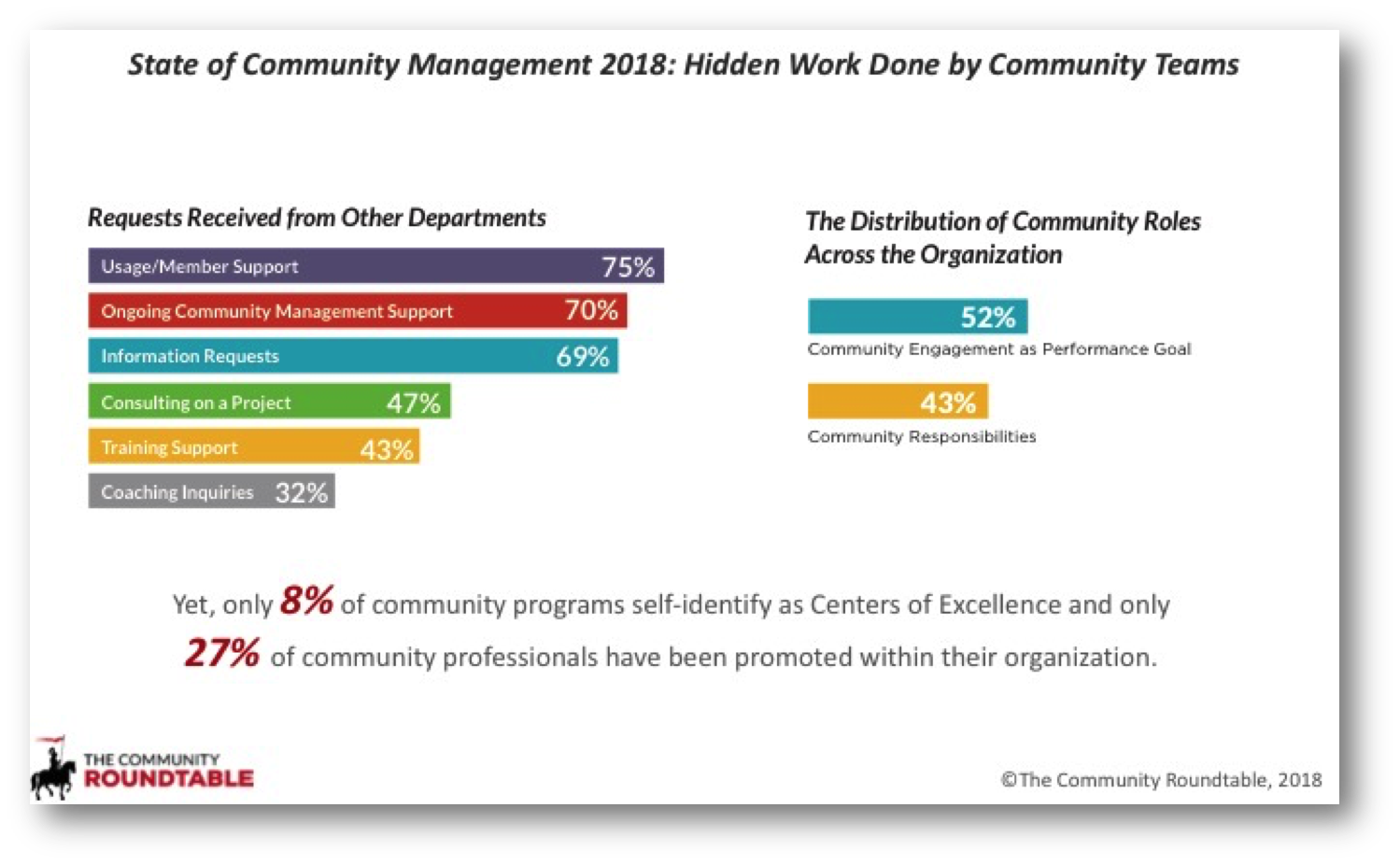
Community managers are often connectors by default – it takes a certain type of person to excel at the role. People with high EQ tend to thrive.
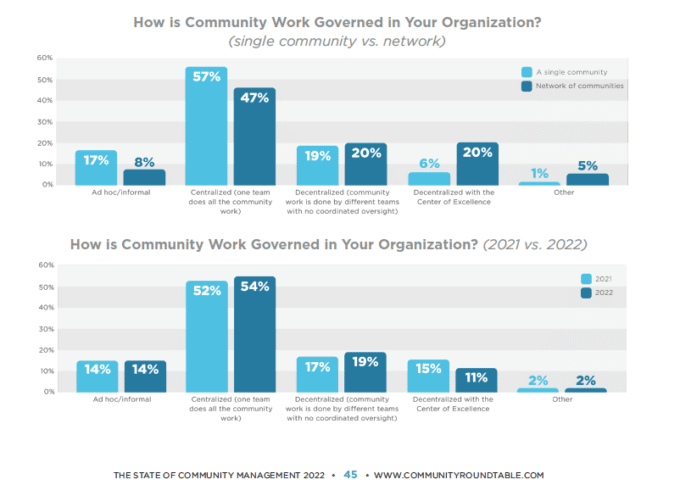
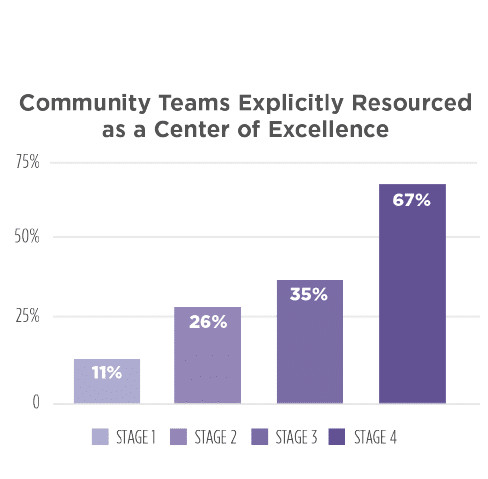
Our research has shown that community leaders with a network of communities are more likely to provide enabling resources to their organization than those with a single community. Comparing the data from respondents who reported “one community” vs. “a network of communities” at their organization, we found a dramatic increase in CoEs once a network exists (i.e., once they’re past the initial use case).
Also interesting, 17% of respondents (8% in a network of communities) reported only ad hoc/informal governance. (Question: Who’s in charge of the communities there? If this is you, please contact us. We want to feature you in a case study.)
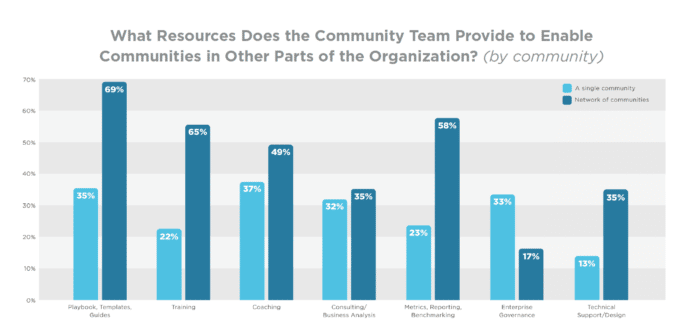
It’s interesting to note that 30% of community managers who represent a single community provide none of the resources mentioned in the survey, which likely results in a less strategic initiative. For those who want to grow beyond a single community, get out there and coach/evangelize!
Some common use cases to extend the reach and the benefit in your organization include:
- General employee communities for knowledge sharing and collaboration
- Customer support communities for providing fast, inexpensive, always-on access to answers to product and service questions.
- Membership communities for groups like students, patients, alumni, or association audiences
Tips on Getting Started
- Start a monthly “community jam” for those who want to learn more about community and how it might help them with a specific business use case.
- Coach executives on how they can best support your work — try to get them to an “aha moment” on how community approaches could help another area of the business.
- Document what has or hasn’t worked in your community, and begin compiling templates, and (ultimately) a community playbook for your organization.
It may feel overwhelming when you consider it, but by taking an iterative approach you’ll get where you want to be faster.

 Community management work is evolving along with roles – and evolving rapidly. As all communications become networked, community engagement and management is a discipline that everyone needs to cultivate to be successful.